Grooming · 3 min read · 17 views
How To Dress Your Puppy
Dressing your puppy is an important part of puppy parenthood.

How to Dress Your Puppy
Many owners dress their puppies for style. Clothes can also do a job. A coat keeps a small puppy warm. A rain coat keeps the fur dry. Boots protect the paws from salt and hot ground. Your puppy does not know this. To your puppy, clothes are a strange object on the body. Start slowly. Make each step short and pleasant. A puppy that likes its clothes will wear them again. A puppy that fights its clothes will fight them for life.
Measure Before You Buy
Measure your puppy before you buy any garment. You need three numbers: the neck, the chest at the widest point, and the length from the neck to the base of the tail. Write the numbers down. Compare them to the size chart of the maker. Do not use the weight of the puppy alone. Two puppies of the same weight can have a different shape.
Check the fit when the garment arrives. Put two fingers between the garment and the body of your puppy. If the fingers do not go in, the garment is too tight. If the garment turns around the body, it is too large. A loose garment can catch on a fence or a branch. Remember that a puppy grows fast. Check the fit again each month.
Choose the Correct Garment
Each type of garment has a different function. Select the garment for the weather and for the activity.
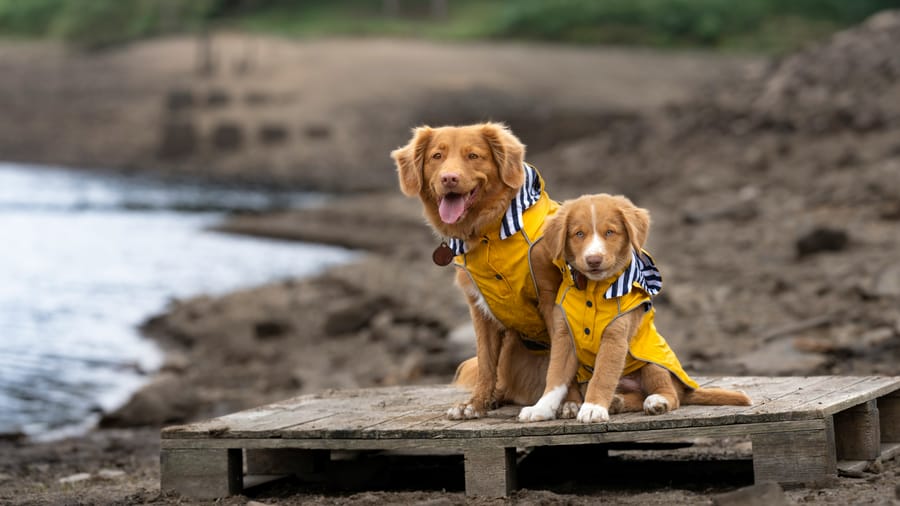
- Rain coat. Use a rain coat for wet walks. Select a coat with a waterproof outer layer and a light lining. A hood is not necessary. Most puppies do not like a hood.
- Winter coat. Use a winter coat for cold weather. Small breeds and short-haired breeds lose heat quickly. A padded coat with a high collar is a good choice.
- Sweater. Use a sweater indoors or for a short walk in cool weather. Select a sweater with a smooth knit. A loose knit can catch a claw.
- Boots. Use boots on hot ground, on ice, or on roads with salt. Boots are the most difficult item for a puppy to accept. Introduce them last.
- Bandana or bow tie. Use these for style only. They add no protection. They are a good first item, because they are light.
Select strong closures. Hook-and-loop tape is quick, but it can pull the fur. A clip or a zip is better for a puppy with long hair. Always select bright colours for a walk at night. Reflective tape on the back and the sides makes your puppy easy to see.
Teach Your Puppy to Accept Clothes
Do not put a coat on your puppy and go out immediately. Use small steps.
- Put the garment on the floor. Let your puppy look at it and smell it. Give a treat.
- Touch your puppy with the garment. Do not put it on. Give a treat.
- Put the garment on for five seconds. Remove it. Give a treat.
- Increase the time slowly. Play a game or give a meal when the garment is on.
- Go outside with the garment on. Keep the first walk short.
Watch your puppy for signs of stress. A stressed puppy stops, lies down, or freezes. It can also lick its lips or show the white of the eyes. If you see these signs, remove the garment. Go back to the last step that was easy. Do not force your puppy to continue.
Safety Rules
Obey these rules each time:
- Do not leave your puppy alone in clothes. A garment can catch on furniture.
- Remove the garment when your puppy is indoors and warm.
- Remove a wet garment immediately after a walk. A wet garment makes the puppy cold.
- Check the skin below the garment for red areas or hair loss.
- Do not use clothes that cover the mouth, the nose, or the eyes.
- Do not put clothes on a puppy that is less than eight weeks old.
Clothes are a tool and a decoration. Comfort comes first, and style comes second. Keep the sessions short, give many treats, and stop before your puppy is tired. Your puppy will soon stand still for its rain coat and wait at the door.